Can Cervical Cancer Go Away On Its Own / Hpv / , hpv clears up on its own within 2 years.
Dapatkan link
Facebook
X
Pinterest
Email
Aplikasi Lainnya
Can Cervical Cancer Go Away On Its Own / Hpv / , hpv clears up on its own within 2 years.. A screening test can find changes in cervical cells before they turn into cancer. In most people, the body is able to clear the infection on its own. Only about 13 types of hpv have been found to lead to cervical cancer if they don't go away on their own. Cervical dysplasia can range from mild to severe, depending on the appearance of the abnormal cells. The cancer might invade other tissues and organs.
Learn more about the causes, symptoms, diagnosis, treatment, prevention, and outlook. These changes may also be called mild dysplasia or cervical intraepithelial neoplasia 1 (cin 1). A screening test can find changes in cervical cells before they turn into cancer. Only about 13 types of hpv have been found to lead to cervical cancer if they don't go away on their own. These women may get regular treatments with chemotherapy, radiation therapy, or other therapies to try to control the cancer for as long as possible.
Cervical Cancer Overview Cancer Council Victoria from www.cancervic.org.au Depending on your prior cervical cancer screening history, your provider may recommend you have a repeat cervical cancer screening or a colposcopy, which is an up. The risk of recurrence is highest during the first 2 years after treatment. In most cases, hpv goes away on its own and does not cause any health problems. However, if an infection does not go away, it is possible to develop hpv symptoms months or years after getting infected. Most polyps are small, about 1 centimeter to 2 centimeters long. Bleeding is the most common first symptom of cervical cancer. This is the most common abnormal pap result. This might lead to swelling in your legs due to fluid build up.
Various strains of the human papillomavirus (hpv), a sexually transmitted infection, play a role in causing most cervical cancer.
But sometimes, the infection doesn't go away. Smoking and having a weakened immune system increase the chance that an hpv infection will not go away on its own and will develop into a precancerous condition of the cervix. Of course, cancers do not routinely go away, and no one is suggesting that patients avoid treatment because of such occasional occurrences. A screening test can find changes in cervical cells before they turn into cancer. Because rare types of cancerous conditions can look like polyps, all polyps should be removed and examined for signs of cancer. This can happen during menstruation or sexual intercourse. In fact, according to a study published in viruses in 2017, around 80 to 90% of all hpv infections clear up on their own in two years. Cancer cells can also stop lymph fluid from draining away. Or, rarely, it could develop into cancer. The goal of cervical cancer screening is to find these early changes in the cells so that they can be treated before cancer can develop. Cervical cancer is common if you have hpv,. An infection may go away on its own. Sometimes, cervical polyps may come away from the cervix on their own.
Most women experience only few problems. There are more than 150 types of this virus. This is the most common abnormal pap result. This bleeding, which comes from the uterus, is sometimes. But sometimes, the infection doesn't go away.
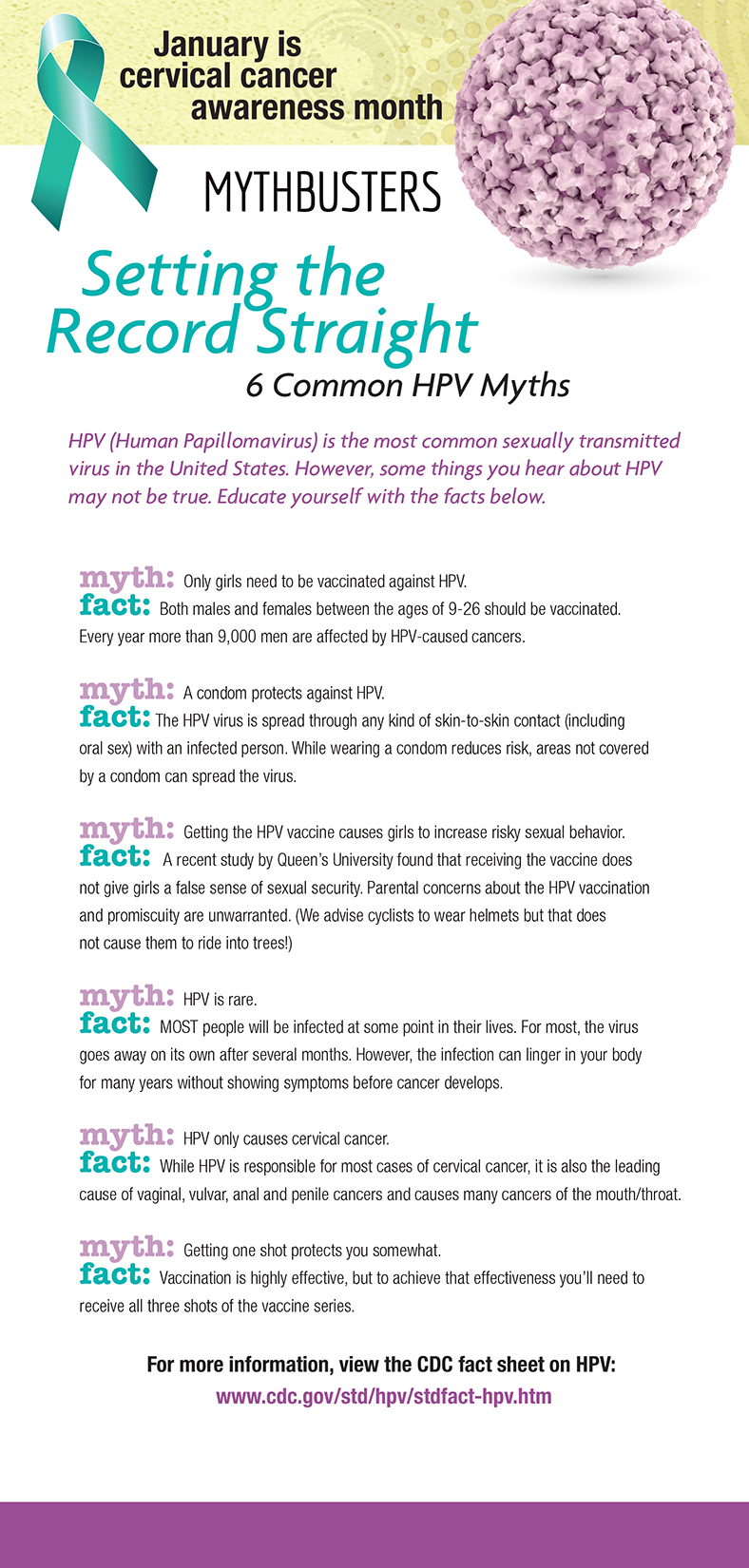
Six Hpv Myths Debunked Roswell Park Comprehensive Cancer Center from www.roswellpark.org 3 bleeding caused by cervical cancer can take several forms including: But sometimes, the infection doesn't go away. Cervical polyps are usually not cancerous (benign) and can occur alone or in groups. The condition can go away on its own. The risk of recurrence is highest during the first 2 years after treatment. Hpv 16 and 18 cause about 70 percent of all cervical cancer. These women may get regular treatments with chemotherapy, radiation therapy, or other therapies to try to control the cancer for as long as possible. In fact, according to a study published in viruses in 2017, around 80 to 90% of all hpv infections clear up on their own in two years.
Or, rarely, it could develop into cancer.
Does hpv cause health problems? These changes may also be called mild dysplasia or cervical intraepithelial neoplasia 1 (cin 1). An infection may go away on its own. Because rare types of cancerous conditions can look like polyps, all polyps should be removed and examined for signs of cancer. These include hpv 16, hpv 18, hpv 31, hpv 33 and hpv 45. Infection and subsequent inflammation with the bacteria helicobacter pylori (h. These women may get regular treatments with chemotherapy, radiation therapy, or other therapies to try to control the cancer for as long as possible. Cervical cancer can spread to lymph nodes in the area between the hip bones (pelvis). This makes it hard to know exactly when you became infected. A screening test can find changes in cervical cells before they turn into cancer. Cervical dysplasia can range from mild to severe, depending on the appearance of the abnormal cells. If dysplasia develops, it may resolve on its own or with treatment, or progress to cervical cancer without treatment. The risk of recurrence is highest during the first 2 years after treatment.
Or, rarely, it could develop into cancer. Hpv is the most important risk factor for developing a precancerous condition of the cervix. These include hpv 16, hpv 18, hpv 31, hpv 33 and hpv 45. Smoking and having a weakened immune system increase the chance that an hpv infection will not go away on its own and will develop into a precancerous condition of the cervix. In most cases, hpv goes away on its own and does not cause any health problems.
Hpv Puts Strain On Sex And Dating Bbc News from ichef.bbci.co.uk In fact, according to a study published in viruses in 2017, around 80 to 90% of all hpv infections clear up on their own in two years. Or, rarely, it could develop into cancer. Infection with the human papillomavirus (hpv) is the main risk factor for precancerous changes in the cervix. This can happen during menstruation or sexual intercourse. But if you find out you have hpv,. Most hpv infections go away on their own and don't cause any health problems. Sometimes, cervical polyps may come away from the cervix on their own. This makes it hard to know exactly when you became infected.
There are more than 150 types of this virus.
Infection and subsequent inflammation with the bacteria helicobacter pylori (h. Hpv is the most important risk factor for developing a precancerous condition of the cervix. Cervical cancer happens when the cells of your cervix change. If these abnormal cells are not found and treated, they may become cancer. The condition can go away on its own. These women may get regular treatments with chemotherapy, radiation therapy, or other therapies to try to control the cancer for as long as possible. Dysplasia could go away on its own. These include hpv 16, hpv 18, hpv 31, hpv 33 and hpv 45. Most polyps are small, about 1 centimeter to 2 centimeters long. In most cases, hpv goes away on its own and does not cause any health problems. Cervical polyps are usually not cancerous (benign) and can occur alone or in groups. Pylori) can result in chronic atrophic gastritis, an inflammatory precancerous change in the lining of the stomach that can lead to stomach cancer. 3 bleeding caused by cervical cancer can take several forms including:
Selain itu, petugas kelurahan kadang atau sering. Ini anda dapatkan dari kantor kelurahan atau kantor kepala desa di mana perusahaan anda berdomisili. Di dalam suatu perkara perdata, pihak penggugat akan mengajukan gugatan ke pengadilan negeri. Berdasarkan surat ini, camat mengeluarkan surat keterangan yang sama. Sektor jasa konstruksi merupakan kegiatan masyarakat mewujudkan bangunan yang berfungsi sebagai pendukung atau prasarana aktivitas sosial ekonomi kemasyarakatan guna menunjang terwujudnya tujuan pembangunan nasional. Doc Surat Gugatan Wanprestasi Ervian Eda Academia Edu from 0.academia-photos.com Di dalam artikel format surat gugatan dijelaskan bahwa secara garis besar surat gugatan biasanya berisi antara lain: Ketentuan pengajuan gugatan diatur dalam pasal 118 reglemen indonesia yang diperbaharui ("hir"). Unair reposito...
How To Make Handmade Love Cards : 32 Ideas For Handmade Valentine S Day Card Interior Design Ideas Avso Org / Let's make this love card. . Make meaningful moments even more personal with handcrafted card making ideas that capture the mood and show loved ones how much you care. Handmade stylish greeting card, greeting card for love, latest design love greeting card, how to make love greeting cards, forever love greeting card handmade How do i make a greeting card that a teacher will appreciate? It's certainly not the only formula for making when you're learning how to make handmade cards, you might start to feel a little bit overwhelmed. These cute diy romantic cards will be the best gift made with love! Holiday season is here, most of you are looking for creative & unique card making ideas these days. It's certainly not the only formula for making when you're learning how to make handmade cards, you might start to feel a little bit overwhe...
How To Make Hallmark Cards : How To Start A Greeting Card Business Truic : Sign in to your hallmark account to access or update crown rewards, order history, profile info, saved shipping and payment methods, and more. . So, if you want to make money witting greeting cards for hallmark, you will probably have to move to kansas city, mo. Launch the hallmark card studio program. (you can send them in invitations or make them available at the celebration.) you can read them aloud or ask others to help. For more than 100 years, hallmark has designed greeting cards for life's special moments. Afterward, put all the cards in a jar or book as a gift to the guest of honor. Afterward, put all the cards in a jar or book as a gift to the guest of honor. Make $51,000 a year on average, business insider reports, citing salary data from indeed.com. If you bought a hallmark card, it might've been diana manning, who's worked for the company for more than 30 years, creat...



Komentar
Posting Komentar